Material identification
Reference, color, finish, yarn package, lot and specimen orientation.
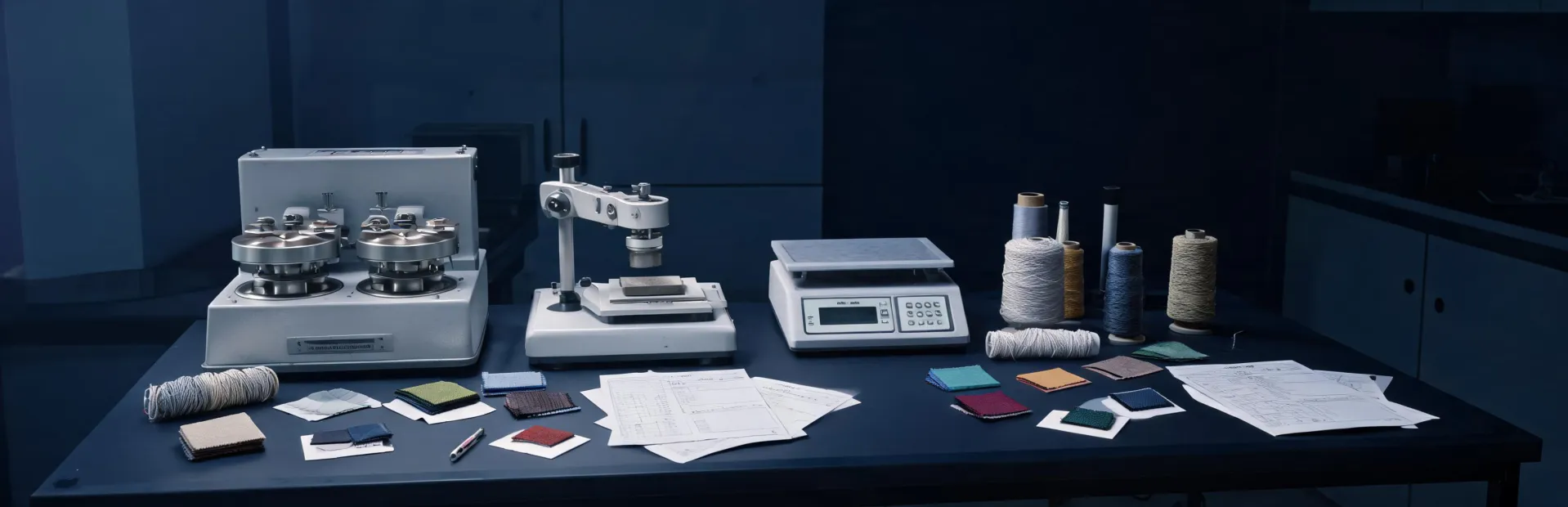
Textile standards and report boundaries
A method name is the beginning of a technical claim, not the conclusion. Specimen identity, conditioning, endpoint, unit and report scope determine what the result can support.
Reference, color, finish, yarn package, lot and specimen orientation.
Temperature, relative humidity and conditioning duration stated by the selected method.
Standard edition, apparatus, load, abradant or reagent, cycle and specimen count.
Visual change, mass loss, break, deyarn preparation or graded transfer defined before testing.
The result applies to the tested construction and conditions, rather than every color, yarn package or assembly.
Start with a labeled sample from the intended construction. Condition it as required by the named method. Record apparatus settings, orientation and specimen count. Preserve before-and-after images, raw observations and the pass criterion. When a buyer supplies a substrate or cleaner, test that system rather than extrapolating from an unrelated configuration.
Report review
A certificate or test report should identify issuer, date, material reference, method, result and limitations. An expired, partial or differently configured report may inform screening but cannot automatically close a purchase requirement.
Capture yarn tensile or fabric abrasion method, abradant, pressure, endpoint and cycles. Results between methods are not interchangeable.
Record crocking direction, wet or dry condition, staining scale and grading. Pile direction and finish can affect interpretation.
Document yarn count, machine settings, tension, finishing temperature and conditioning before evaluating construction stability and appearance.
Market, end use and assembly determine whether a buyer method, ISO, ASTM, EN or sector-specific procedure applies. The latest agreed edition belongs in the brief.
Specimen size, thickness, yarn package and finished assembly may make a method unsuitable or require a defined adaptation. Any deviation must appear in the report.
Higher twist level may improve barrier behavior while reducing softness or conformability. A spun yarn surface may support tactile goals while requiring stricter pile-direction color control. Neither route is universally superior.
State what passed, under which conditions, for which reference and through which date or lot. Do not convert a component result into an product declaration without product-level testing.
Send the required standard, target result, specimen construction and end-use assembly. The response will distinguish available evidence from testing still required.